Houston Uber & Lyft Accident Lawyer
Rideshare accidents involve complex insurance issues. Whether you were a passenger, driver, or third party, we navigate the multiple insurance policies to maximize your recovery.
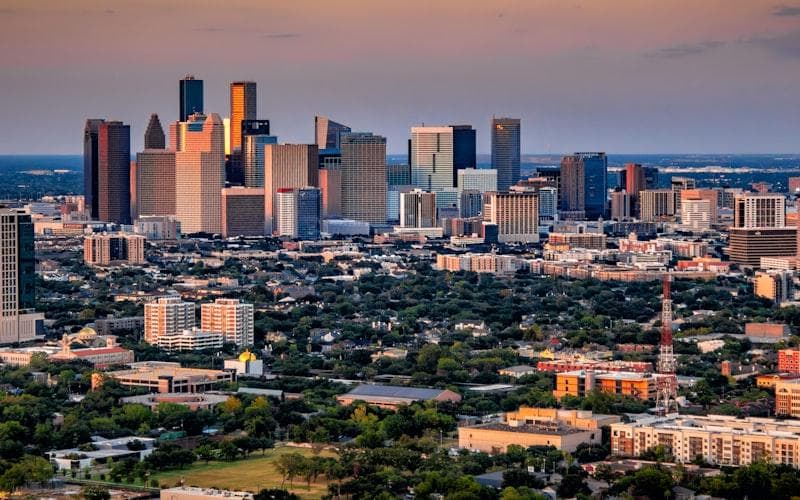
Houston is the largest city in Texas and has some of the most dangerous highways in the nation. Our attorneys have the experience to handle complex injury cases in the Houston area.
Serving Houston
Attorney Israel Medina handles your case personally
You speak directly with your attorney
Gulf Coast
Harris County
No Fee Unless We Win
Free consultation available
24/7 Availability
We’re here when you need us
An Uber & Lyft Accident Law Firm Built for Houston
If you’ve been injured in an uber & lyft accident incident in Houston, you need an attorney who understands both the law and the local landscape. Medina & Medina represents clients throughout Gulf Coast and is familiar with the Harris County court system. Our Houston team offers free consultations and charges no fee unless we win your case.
How a Houston-Based Uber & Lyft Accident Attorney Changes the Outcome
- Familiarity with Houston courts, judges, and local legal procedures
- Knowledge of dangerous corridors in Houston, including I-45 and I-10
- Established relationships with trusted local medical providers and expert witnesses
- Convenient access for in-person meetings at our office near Houston
Medina & Medina combines local expertise with proven results across Gulf Coast. We offer free consultations to every Houston victim and charge no fee unless we win your case.
Compensation for Uber & Lyft Accident Victims in Houston
Medical Expenses
All treatment costs related to your injury
Lost Income
Wages lost while recovering
Pain & Suffering
Compensation for physical and emotional distress
Future Damages
Long-term care and lost earning capacity
Texas Statute of Limitations
You have, in most cases, two years under Texas law to bring a personal injury lawsuit after the date you were hurt. That window closes faster than it sounds. Call us now and we will tell you exactly where the clock stands in your case.
Uber & Lyft Accident Cases in Houston
Uber & Lyft Accident cases in Houston frequently arise along major corridors including I-45, I-10, US-59/I-69, I-610 Loop. Houston has a population of over 2.3 million residents, making it the largest city in Texas and the fourth largest in the United States
High-risk areas in Houston include I-45 (Gulf Freeway) between downtown and Galveston, I-10 and I-610 interchange (West Loop), US-290 (Northwest Freeway) corridor, I-45 North (North Freeway) through Spring and The Woodlands, Westheimer Road through the Galleria area. If you have been injured near any of these locations, our attorneys can help.
- Harris County leads the state of Texas in traffic fatalities, with over 600 fatalities reported in recent years
- Houston's sprawling road network covers over 16,000 lane miles, and the city consistently ranks among the most dangerous metro areas for drivers in the country
Understanding Uber & Lyft Accident Cases
Common Causes
In Houston, uber & lyft accident cases often trace back to conditions on I-45 and near I-45 (Gulf Freeway) between downtown and Galveston. Local drivers and pedestrians encounter these specific risks when navigating these corridors.
- Rideshare drivers distracted by the navigation app on their phone
- Drivers unfamiliar with the area making sudden stops or turns
- Fatigue from driving long shifts without adequate rest
- Unsafe pickups and dropoffs in traffic lanes or intersections
- Speeding to complete more rides and earn higher fares
- Third party drivers colliding with rideshare vehicles
Typical Injuries
Accident victims in Houston are typically transported to trauma centers including Memorial Hermann Texas Medical Center (Level I Trauma Center). The following injuries are common outcomes of these incidents.
- Whiplash and neck strains from rear end collisions
- Concussions and traumatic brain injuries
- Back injuries and herniated discs
- Broken wrists and arms from bracing on impact
- Soft tissue injuries throughout the body
- Emotional distress and post traumatic stress
Establishing Liability
For uber & lyft accident claims filed in Harris, liability often turns on evidence gathered from specific Houston locations, including I-45 (Gulf Freeway) between downtown and Galveston.
Rideshare accident claims involve multiple layers of insurance depending on whether the driver was logged into the app, en route to pick up a passenger, or actively transporting a rider. Uber and Lyft provide up to $1 million in liability coverage when a passenger is in the vehicle, but coverage is lower during other app stages. Determining which insurance policy applies requires a careful analysis of the driver app status at the time of the crash.
Relevant Texas Law
Residents of Houston pursue these claims under the same Texas statutes that govern all state personal injury actions.
Texas Insurance Code Chapter 1954, known as the Texas Transportation Network Company Act, requires rideshare companies to maintain specific insurance coverage levels for each phase of driver activity. When a driver is transporting a passenger, the company must carry at least $1 million in combined single limit coverage. Texas law treats rideshare drivers as independent contractors, but the companies remain responsible for ensuring minimum insurance requirements are met.
Ready to discuss your case?
Free consultation. No fee unless we win.
Local Resources and Courts in Houston
Harris County Civil Courthouse, 201 Caroline St, Houston, TX 77002
Personal injury civil cases in Houston are filed in the Harris County District Courts. Harris County has the largest number of civil district courts in Texas, located at the Harris County Civil Courthouse in downtown Houston.
Nearby Hospitals and Trauma Centers
- Memorial Hermann Texas Medical Center (Level I Trauma Center)
- Ben Taub Hospital (Level I Trauma Center)
- Houston Methodist Hospital
- Texas Children's Hospital
Free Case Evaluation
Get a free review of your case in minutes.
Or call now
(512) 500-2810The Uber & Lyft Accident Pattern in Houston
Period determination is the move that runs a Houston rideshare case from the day of intake. The Texas Insurance Code Chapter 1954 three-period framework establishes which insurance layer responds, and the period at the moment of impact controls everything downstream. Period 0 leaves the driver on his personal auto policy with the platform disclaiming coverage. Period 1, app on with no ride accepted, brings the platform $50,000 per person, $100,000 per occurrence, and $25,000 property-damage minimums into the picture with contingent personal coverage running behind. Period 2, en route to pick up, and Period 3, passenger in the vehicle, both require the $1 million commercial layer plus uninsured and underinsured motorist coverage. On a Houston case, the period evidence sits on the platform server in the in-app GPS log, the ride-acceptance and ride-start timestamps, and the trip record itself, and the preservation push has to start within days because Uber and Lyft retention cycles on app data and dashcam (where installed) run thirty to ninety days.
The Houston rideshare volume concentrates at four geographies. George Bush Intercontinental Airport and Hobby Airport pickup and dropoff zones produce the steady airport-corridor caseload, with the rideshare staging areas and the curbside dropoff lanes feeding the recurring fact pattern of a driver pulling into active traffic. The Washington Avenue, Midtown, and EaDo entertainment-district perimeter produces the late-night dropoff and pickup volume, with the post-close window at the downtown bars stacking dozens of drivers into a few blocks. Texas Medical Center patient and visitor transportation produces a distinct volume tied to medical appointments, hospital discharges, and family-visitor movement around the largest medical complex in the world, and the patient-injury exposure on a medically fragile passenger is a separate damages consideration on every TMC case. The catastrophic-injury subset comes off the inner-loop interstates, the I-45 Gulf Freeway, I-10 Katy Freeway, US-59 / I-69, and I-610 Loop, where rideshare-driver-fault Period 2 or Period 3 collisions at urban-freeway speeds drop the case into the $1 million commercial layer.
The independent-contractor classification fight is the recurring corporate-liability theory against Uber and Lyft on every Houston matter. The platforms plead the Texas Labor Code section 92.001 independent-contractor framework and the Texas Occupations Code Chapter 2402 TNC Act driver classification language as a shield against respondeat superior. The plaintiff response builds on the control-test evidence, the deactivation-and-onboarding records, the in-app driver-management features, the surge-pricing and rate-setting practices, and the driver-rating consequences that establish actual control. Background-check failure and negligent-hiring claims against the platforms are the recurring direct-liability theory, with the section 2402 background-check framework requiring an annual records check that the platform vendor reports. The Houston cases that reach the negligent-hiring claim usually involve a driver with prior moving violations, prior DWI, or prior criminal history that the section 2402 framework should have flagged. Beyond the platform fight, the driver-fault Period 2 and Period 3 case has to be developed against the at-fault driver as a separate defendant with personal liability exposure beyond the platform layer.
Harris County district courts at 201 Caroline Street downtown hear these matters when the passenger user-agreement arbitration clause is successfully challenged, and the arbitration fight is itself a recurring battle. The user-agreement clause is invoked aggressively on every passenger case, and a sizable subset of the docket ends in arbitration rather than open court. The pedestrian, cyclist, and other-driver-hit-by-rideshare cases sit outside the user-agreement arbitration framework and proceed in district court on the platform-liability and at-fault-driver liability theories. Aggregate Harris County-area rideshare cases against the platform have run from roughly $50,000 in moderate soft-tissue passenger cases to over $3 million in catastrophic-injury cases against the platform under Period 2 / Period 3 coverage. Harris County juries skew plaintiff-friendly on clear-liability commercial-defendant cases, and Uber and Lyft as named defendants on the catastrophic matters carry the same posture as any large corporate defendant. The case file built early on the period evidence, the platform app data preservation, and the negligent-hiring discovery is what survives the Houston defense bar on the matters that reach trial.
Verdict and Settlement Bands
Houston-area rideshare cases against the platform have ranged from $50,000 (moderate soft-tissue passenger cases) to over $3 million (catastrophic-injury cases against the platform under Period 2/3 coverage), with mandatory-arbitration provisions in passenger user-agreements pushing many cases out of court.
How These Cases Arise
Rideshare crashes in Texas reflect the realities of distracted-driving by the rideshare drivers themselves (phone screens running navigation, ride-acceptance, and passenger-message apps) and the long hours many drivers work across multiple platforms. Pickup-and-dropoff incidents at airports, in entertainment districts, and at apartment complexes generate the lion's share of urban claims. The catastrophic crashes more often involve a rideshare driver hit by an at-fault third party, with the passenger sustaining injury from a side-impact or rollover.
- George Bush Intercontinental Airport pickup-zone incidents
- Washington Avenue and Midtown late-night entertainment pickup/dropoff
- Texas Medical Center patient-transport collisions
The Injury Picture
Passenger injuries in rideshare crashes mirror the general car-accident injury profile: cervical-spine strains, lumbar disc injuries, traumatic brain injury in higher-speed crashes, and orthopedic injuries from intrusion. The medical-records picture is complicated by the passenger's lack of a personal relationship with the driver, which means contact information, witness statements, and the platform's record of the trip are essential to establishing the case.
The Liability Framework
Coverage in rideshare cases turns on the driver's "period" at the time of crash: Period 0 (app off, personal insurance), Period 1 (app on, awaiting ride request, Uber/Lyft contingent liability), Period 2 (en route to pickup, Uber/Lyft commercial coverage of $1M), and Period 3 (passenger in vehicle, Uber/Lyft commercial coverage of $1M). Texas Insurance Code Chapter 1954 (the Transportation Network Company Insurance Act) establishes minimum coverage requirements and notice obligations. Coverage disputes between the rideshare carrier and the driver's personal carrier are routine and require careful coverage litigation.
Where This Case Would Be Filed
Harris County district courts hear these cases when arbitration is successfully challenged; Texas Insurance Code Chapter 1954 (TNC Insurance Act) governs coverage layering between personal carrier and platform commercial coverage.
Procedural Notes
Letters of representation and document-preservation demands must go to Uber/Lyft directly, not just to the driver; the trip telemetry, app data, and driver-acceptance record are uniquely held by the platform. Mandatory-arbitration clauses in passenger user-agreements are routinely raised and contested.
Our Reach in Harris County
Our attorneys represent personal injury clients in the Harris County District Courts, the largest civil court system in Texas, with experience filing in the downtown civil district courts and the county courts at law.
The Local Jury
Harris County is one of the most racially and economically diverse jury pools in the country; historically among the most plaintiff-friendly metros in Texas, particularly in trucking, premises-liability, and refinery-injury cases against corporate defendants.
Local Reference Points
- • George Bush Intercontinental Airport (IAH)
- • Washington Avenue corridor
- • Texas Medical Center
How Else We Help in Houston

Car Accident
Expert legal help for car crash victims

18-Wheeler Accident
Advocating for trucking accident victims

Truck Accident
Specialized truck accident representation

Motorcycle Accident
Dedicated advocacy for injured riders

Traumatic Brain Injury
Advocating for brain injury survivors

Spinal Cord Injury
Paralysis and spinal injury claims

Wrongful Death
Compassionate representation for grieving families
Amputation Injury
Limb loss and amputation claims
More Related Practice Areas and Cities
Helpful Reading for Houston Clients
Rideshare Accident Claims. Suing Uber or Lyft in Texas
Rideshare accidents in Texas create unique legal challenges because Uber and Lyft classify their drivers as independent contractors. Texas law still provides a path to hold these companies accountable, and the amount of insurance coverage available depends on what the driver was doing at the time of the crash.
Car AccidentsWhat to Do Immediately After a Car Accident in Texas
The steps you take immediately after a car accident can significantly impact your injury claim. Learn what to do to protect your rights.
Insurance TipsHow Insurance Companies Try to Minimize Your Claim
Insurance companies use a playbook of proven tactics to reduce what they pay injured Texans. From recorded statements to low-ball offers, understanding these strategies is your best defense against being taken advantage of after an accident.
Cities We Serve Near Houston







Frequently Asked Questions in Houston
The order of operations is medical care, then evidence, then counsel. A trauma evaluation at Memorial Hermann Texas Medical Center (Level I Trauma Center) or a comparable Houston facility creates the contemporaneous record that supports a future claim, especially when the injury is something like Whiplash and neck strains from rear end collisions that can be missed on a roadside check. Once you are stable, photograph everything you can and write down what you remember while the details are fresh. Insurance adjusters will call quickly. A short call with a lawyer before that conversation almost always changes the trajectory of the case.
The Harris district courts have civil jurisdiction over personal injury actions, and the case would most likely be filed at Harris County Civil Courthouse, 201 Caroline St, Houston, TX 77002. From filing through trial, our firm runs cases in front of these judges on a regular basis. That continuity matters when it comes to scheduling, evidentiary rulings, and the timing of settlement negotiations.
Trauma care in Houston is concentrated at facilities including Memorial Hermann Texas Medical Center (Level I Trauma Center), Ben Taub Hospital (Level I Trauma Center), and Houston Methodist Hospital. Common injuries treated at these centers include Whiplash and neck strains from rear end collisions, Concussions and traumatic brain injuries, and Back injuries and herniated discs. Choosing a hospital with experience in your specific injury type can affect both your recovery and the medical documentation that supports your claim.
Yes. For most uber & lyft accident cases in Texas, the law allows two years from the date of the injury to file suit. After that, even a strong case is generally barred. Minors, discovery-rule cases, and claims involving public entities run on different clocks, sometimes much shorter ones in the case of governmental defendants. Do not let a missed notice deadline kill an otherwise solid case.
In Houston, these cases frequently arise along I-45 and at high-risk locations such as I-45 (Gulf Freeway) between downtown and Galveston. A recurring cause we see is Rideshare drivers distracted by the navigation app on their phone, which we investigate through police reports, eyewitness accounts, and available video footage.
A local attorney in Houston brings knowledge of Harris, the bench at Harris County Civil Courthouse, 201 Caroline St, Houston, TX 77002, and the specific neighborhoods where our clients live, including the broader community. That local grounding helps with venue strategy, witness interviews, and communication with juries who reflect the community.
Your Houston Uber & Lyft Accident Case Starts With a Conversation
Evidence fades. Witnesses move. Adjusters lock in their position. Our Houston uber & lyft accident attorneys will review your case at no cost, and you owe us nothing unless we recover.