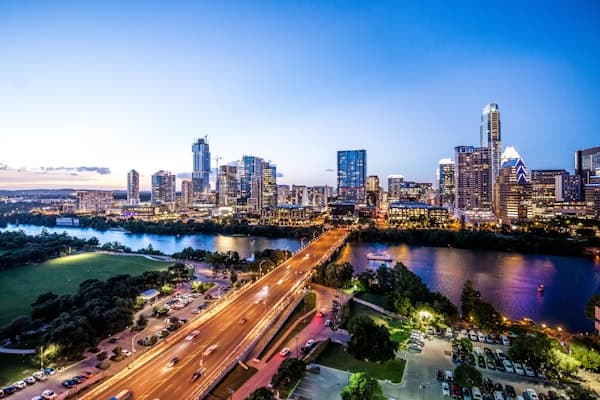
Austin Car Accident Lawyer
We handle everything from fender benders to catastrophic crashes, fighting for compensation that covers medical bills, lost wages, and pain and suffering.
As the capital of Texas and one of the fastest-growing cities in the nation, Austin sees thousands of accidents each year. Our attorneys are familiar with local courts, judges, and the unique challenges of pursuing injury claims in the Austin area.
We serve accident victims throughout Austin, including Downtown, South Congress, East Austin, North Austin, South Austin, West Lake Hills, Mueller, Domain, Barton Hills, Zilker.
Serving Austin
Attorney Israel Medina handles your case personally
You speak directly with your attorney
Central Texas
Travis County
No Fee Unless We Win
Free consultation available
24/7 Availability
We’re here when you need us
Car Accident Lawyer in Austin, Texas
Austin is the kind of city where a car accident can upend a family in an afternoon. We built our practice around that reality, working Central Texas and the Travis County court system day after day, year after year. Tell us what happened in a free consultation. Fees come only out of a recovery, never out of your pocket.
How a Austin-Based Car Accident Attorney Changes the Outcome
- Familiarity with Austin courts, judges, and local legal procedures
- Knowledge of dangerous corridors in Austin, including I-35 and US-183 (Research Blvd)
- Established relationships with trusted local medical providers and expert witnesses
- Convenient access for in-person meetings at our office near Austin
Medina & Medina combines local expertise with proven results across Central Texas. We offer free consultations to every Austin victim and charge no fee unless we win your case.
Compensation for Car Accident Victims in Austin
Medical Expenses
All treatment costs related to your injury
Lost Income
Wages lost while recovering
Pain & Suffering
Compensation for physical and emotional distress
Future Damages
Long-term care and lost earning capacity
Texas Statute of Limitations
Miss the deadline and a strong case becomes no case. Texas law puts a two-year ceiling on most personal injury claims, measured from the date the injury occurred. The sooner we are involved, the more we can do.
Car Accident Cases in Austin
Car Accident cases in Austin frequently arise along major corridors including I-35, US-183 (Research Blvd), MoPac Expressway (Loop 1), US-290 East. Austin has a population of over 1 million residents, making it the fourth largest city in Texas
High-risk areas in Austin include I-35 corridor through downtown Austin, US-183 and MoPac interchange, Ben White Blvd (TX-71) and S Lamar Blvd intersection, N Lamar Blvd and US-183 intersection, FM 2222 (Bull Creek Road) through the hills. If you have been injured near any of these locations, our attorneys can help.
- Austin is one of the fastest-growing major cities in the U.S., adding tens of thousands of new residents each year
- Travis County reported over 18,000 total traffic crashes in recent years, with thousands resulting in injuries
Understanding Car Accident Cases
Common Causes
In Austin, car accident cases often trace back to conditions on I-35 and near I-35 corridor through downtown Austin. Local drivers and pedestrians encounter these specific risks when navigating these corridors.
- Speeding and aggressive driving
- Running red lights or stop signs
- Failure to yield right of way
- Distracted driving including texting and phone use
- Driving under the influence of alcohol or drugs
- Tailgating and following too closely
Typical Injuries
Accident victims in Austin are typically transported to trauma centers including Dell Seton Medical Center at The University of Texas (Level I Trauma Center). The following injuries are common outcomes of these incidents.
- Whiplash and cervical spine injuries
- Broken bones and fractures
- Traumatic brain injuries and concussions
- Herniated and bulging discs
- Knee and shoulder injuries
- Cuts, bruises, and soft tissue damage
Establishing Liability
For car accident claims filed in Travis, liability often turns on evidence gathered from specific Austin locations, including I-35 corridor through downtown Austin.
Liability in car accident cases typically turns on which driver breached the duty to operate their vehicle safely. Evidence such as police reports, witness statements, traffic camera footage, and cell phone records can establish that the at fault driver was negligent. Texas follows a modified comparative fault rule, meaning recovery is barred only if the injured party is more than 50 percent at fault.
Relevant Texas Law
Residents of Austin pursue these claims under the same Texas statutes that govern all state personal injury actions.
Texas Transportation Code Chapter 545 establishes the rules of the road that all drivers must follow, including speed limits, lane usage, and right of way requirements. Under Texas Civil Practice and Remedies Code Section 33.001, the proportionate responsibility statute governs how fault is allocated among parties. Texas has a two year statute of limitations for personal injury claims under Section 16.003.
Ready to discuss your case?
Free consultation. No fee unless we win.
Local Resources and Courts in Austin
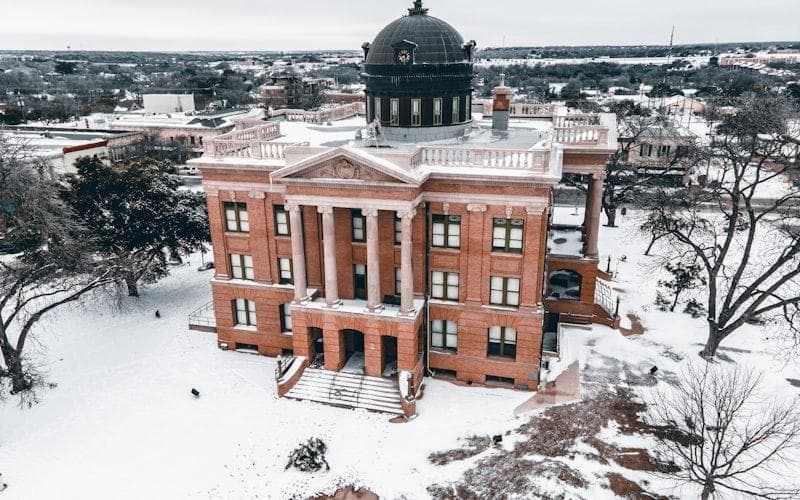
Travis County Civil Courthouse, 1700 Guadalupe St, Austin, TX 78701
Personal injury civil cases in Austin are filed in the Travis County District Courts. Travis County has multiple district courts handling civil matters, located at the Travis County Civil Courthouse in downtown Austin.
Nearby Hospitals and Trauma Centers
- Dell Seton Medical Center at The University of Texas (Level I Trauma Center)
- St. David's South Austin Medical Center
- Ascension Seton Medical Center Austin
- St. David's North Austin Medical Center
Free Case Evaluation
Get a free review of your case in minutes.
Or call now
(512) 500-2810Why These Cases Matter in Austin
Austin sees more car crashes than the city's road infrastructure was built to absorb. Travis County reports thousands of crashes each year, and the corridors that funnel commuter and commercial traffic into downtown and the suburbs are concentrated along a few high speed routes. I-35 through the central city is among the deadliest stretches of urban interstate in Texas. The I-35 Capital Express Project has the route partially under construction through 2026, with concrete barrier shifts, lane closures, and ramp reconfigurations that change every few weeks.[1] Drivers who learned the old layout encounter unfamiliar geometry, and the crash patterns track the construction zones.
The other corridors carry their own pattern. US-183 (Research Boulevard) feeds the North Austin tech campus zone with mid speed multilane traffic and hostile entrance and exit ramps. MoPac Expressway (Loop 1) runs north south parallel to I-35 and carries an increasing share of divert traffic during I-35 construction. US-290 East funnels into the Manor and Elgin commute. Each route produces its own crash type. I-35 produces high speed rear end and sideswipe collisions in stop and go construction zone traffic. US-183 produces ramp merge wrecks and side impact crashes at signal intersections. MoPac produces high speed lane change crashes with serious injury patterns. The downtown grid produces pedestrian and cyclist strikes that route to Dell Seton Medical Center, the only adult Level I trauma center in the eleven county Central Texas region.[2]
Texas car accident law applies the same framework everywhere, but Travis County practice has its own rhythm. The two year statute of limitations under Texas Civil Practice and Remedies Code section 16.003 runs from the crash date for most claims.[3] Texas applies modified comparative fault under section 33.001, barring recovery if the plaintiff is more than fifty percent responsible.[4] Texas minimum liability coverage is 30/60/25, well below what a serious crash actually costs in medical care, and the gap drives uninsured and underinsured motorist coverage analysis on every case. Damages categories include past and future medical expenses, lost earning capacity, physical pain and mental anguish, disfigurement, physical impairment, and loss of consortium for the spouse where applicable. Personal injury non economic damages are not capped in Texas for car accident claims, a distinction that matters in case selection.
The early evidence in an Austin car accident case is the Texas Peace Officer's Crash Report (CR-3) filed by the responding officer. The report contains the diagram, the contributing factor codes, and the narrative that drives early carrier evaluation. We pull the CR-3 immediately, identify witnesses while their memory is fresh, preserve photographic evidence of the scene and vehicle damage, and lock in the medical record sequence before defense counsel can suggest the injuries came from somewhere else. Travis County juries are urban and sophisticated, willing to award reasonable damages where liability and causation are clear, and skeptical of obvious overreach. The Austin defense bar is well resourced and expects a high standard of trial preparation. The cost of being unprepared in front of an Austin jury exceeds the cost of doing the work right.
Local Risk Factors
- I-35 corridor through downtown Austin during the I-35 Capital Express construction phase, with shifting lane geometry, narrowed shoulders, and concrete barrier work zones that produce rear end and sideswipe crash patterns
- US-183 ramp merges into the North Austin tech campus zone where high speed entrance and exit ramps with short merge distances cause side impact and lane departure crashes
- MoPac Expressway (Loop 1) high speed lane change crashes, particularly in the segment between RM 2222 and US-290 where traffic density approaches I-35 levels
- Distracted driving incidents on the downtown grid involving phones, in-vehicle infotainment systems, and rideshare driver attention split, producing pedestrian and cyclist strikes that route to Dell Seton trauma
- Drunk driving crashes concentrated on routes leaving the downtown bar district, with Sixth Street and the Rainey Street corridor as origin clusters and crash sites distributed along the routes home
- Commercial vehicle and 18 wheeler involvement on the I-35 corridor between Austin and San Antonio, where the freight traffic mix creates underride and override crash patterns with severe injury exposure
Where Austin Victims Recover
Dell Seton Medical Center at The University of Texas
trauma
The only adult Level I Trauma Center in the eleven county Central Texas region. Verified by the American College of Surgeons. Primary destination for serious Austin car accident victims with multi system trauma including head injury, spinal cord injury, internal bleeding, and complex orthopedic injury.
St. David's South Austin Medical Center
trauma
Level II Trauma Center serving south Austin and Hays County commute routes. Common destination for crashes on the I-35 south corridor and US-290 East where the route to a Level I facility takes longer than acute injury management requires.
Texas Department of Transportation Crash Records Information System
support
Statewide database of Texas crash reports searchable by location, date, and parties. The CR-3 narrative and contributing factor codes drive carrier evaluation in every Austin car accident case and are subpoenable in litigation.
Vision Zero Austin
support
Austin's traffic safety program tracking serious injury and fatal crashes, with public dashboards showing crash locations and trends. The program data is useful in establishing roadway condition history and safety pattern evidence at specific Austin crash sites.
Sources
- Mobility35, I-35 Capital Express Central Project
- Dell Seton Medical Center at The University of Texas (Ascension)
- Texas Civil Practice and Remedies Code, Chapter 16 (Limitations)
- Texas Civil Practice and Remedies Code, Chapter 33 (Proportionate Responsibility)
- Texas Department of Transportation, Crash Reports and Records
The Car Accident Pattern in Austin
Austin sees more car crashes than the road network was built to absorb, and the corridors that produce them are predictable. I-35 through the central city is among the deadliest stretches of urban interstate in Texas. The Capital Express project has the route partially under construction through 2026, with concrete barrier shifts, lane closures, and ramp reconfigurations that change every few weeks. Drivers who learned the old layout encounter unfamiliar geometry, and the crash patterns track the construction zones. Travis County reports thousands of crashes a year, and the volume concentrates on a handful of corridors that everyone in the city already knows by heart.
The other corridors carry their own pattern. US-183 (Research Boulevard) feeds the North Austin tech campus zone with mid-speed multilane traffic and hostile ramp geometry. MoPac (Loop 1) runs north-south parallel to I-35 and carries an increasing share of divert traffic during the Capital Express work. US-290 East funnels into the Manor and Elgin commute. Each route produces its own crash type. I-35 produces high-speed rear-end and sideswipe collisions in stop-and-go construction zone traffic. US-183 produces ramp-merge wrecks and side-impact crashes at signal intersections. MoPac produces high-speed lane-change crashes with serious injury patterns. The downtown grid produces pedestrian and cyclist strikes that route to Dell Seton, the only adult Level I trauma center in the eleven-county Central Texas region.
Texas car accident law applies the same framework everywhere, but Travis County practice has its own rhythm. The two-year statute of limitations under Texas Civil Practice and Remedies Code section 16.003 runs from the crash date. Texas applies modified comparative fault under section 33.001, barring recovery if the plaintiff is more than fifty percent responsible. Texas Transportation Code Chapter 545 supplies the rules-of-the-road duties that frame negligence per se. The state liability minimum is 30/60/25, well below what a serious crash actually costs in medical care, and the gap drives uninsured and underinsured motorist coverage analysis on every case. Personal injury non-economic damages are not capped in Texas for ordinary car accident claims, a distinction that matters when carriers undervalue MRI-confirmed disc herniations as "minor impact" soft tissue.
The early evidence is the Texas Peace Officer Crash Report (CR-3) filed by the responding officer. The report contains the diagram, the contributing factor codes, and the narrative that drives early carrier evaluation. We pull the CR-3 immediately, identify witnesses while memory is fresh, preserve photographic evidence of the scene and vehicle damage, and lock in the medical record sequence before defense counsel can suggest the injuries came from somewhere else. Travis County juries are urban and sophisticated, willing to award reasonable damages where liability and causation are clear, and skeptical of obvious overreach. Aggregate Travis County car accident verdicts in the last five years have run from roughly $35,000 in disputed-liability soft-tissue cases to over $5 million in catastrophic-injury cases involving impaired or commercial drivers, with median settled clear-liability cases landing in the $75,000 to $250,000 band. The cost of being unprepared in front of an Austin jury exceeds the cost of doing the work right.
Verdict and Settlement Bands
Travis County car-accident verdicts over the last five years have ranged from $35,000 (disputed-liability soft-tissue cases) to over $5 million (catastrophic-injury cases involving impaired or commercial drivers), with median settled clear-liability cases tending to land in the $75,000-$250,000 band depending on injury severity.
How These Cases Arise
Texas leads the nation in fatal traffic crashes, and most of the cases that arrive at our firm trace back to a handful of recurring driver behaviors. Speed and impaired driving still cause the majority of catastrophic injury crashes statewide. The bigger shift over the past decade has been the volume of distracted-driving incidents, particularly rear-end and side-swipe collisions on the urban interstates, where cellphone use turns a routine commute into a multi-vehicle pileup. Failure to yield at uncontrolled intersections in suburban and rural Texas remains a consistent thread, especially in the high-growth counties where signal infrastructure has not kept pace with the population.
- I-35 Capital Express construction-zone rear-end and lane-change crashes
- Sixth Street and Rainey Street entertainment-district late-night impaired-driver crashes
- MoPac (Loop 1) merge collisions during peak commute hours
The Injury Picture
Soft-tissue and cervical-spine injuries from rear-end collisions are the most common diagnoses, but they are also the ones insurers most aggressively undervalue, treating MRI-confirmed disc herniations as "minor impact" cases. The serious-injury picture skews toward traumatic brain injury and orthopedic fractures in higher-speed crashes, with shoulder, knee, and wrist injuries from steering wheel and door impacts. Lifetime-care territory tends to open up when a brain injury, a serious spinal injury, or a wrongful-death claim arises out of a crash with a clear-liability commercial or impaired driver.
The Liability Framework
Texas applies a modified comparative-fault rule under Civil Practice & Remedies Code § 33.001: an injured plaintiff recovers only if their own responsibility does not exceed 50 percent, and any award is reduced by their assigned share. The Texas Transportation Code Chapter 545 supplies the rules-of-the-road duties that frame negligence per se claims. Most car-accident claims turn on the police report, witness statements, and any available roadway-camera or in-vehicle telematics. Underinsured motorist coverage and stacking issues are recurring battlegrounds when the at-fault driver carries only minimum 30/60/25 limits.
Where This Case Would Be Filed
Travis County civil district courts at 1700 Guadalupe Street in downtown Austin hear these cases; the two-year SOL under CPRC § 16.003 runs from the date of crash, with TTCA six-month notice required for any claim involving Capital Metro or Austin Public Works vehicles.
Procedural Notes
The two-year statute of limitations under Civil Practice & Remedies Code § 16.003 runs from the date of the crash; minors get tolling under § 16.001 until age 18. Claims against the State of Texas or local government drivers trigger the Texas Tort Claims Act notice deadline (six months under § 101.101).
Our Reach in Travis County
Our attorneys have handled personal injury cases in the Travis County District Courts for years, including jury trials and pretrial dispositions in both the civil district courts at the Heman Marion Sweatt Courthouse and the County Courts at Law.
The Local Jury
Travis County juries are urban, educated, and politically progressive, historically plaintiff-friendly in clear-liability soft-tissue and commercial-trucking cases, but skeptical of damages claims they perceive as inflated. Defense bar has adjusted scheduling to push toward the late-fall dockets where college schedules thin the venire.
Local Reference Points
- • I-35 between Ben White Boulevard and US-290 East
- • Sixth Street and Rainey Street entertainment districts
- • MoPac / Cesar Chavez interchange
Learn More About Your Claim in Austin
Injured by a distracted driver in Austin, Texas? Medina & Medina fights for full compensation for victims of texting and distracted driving accidents. Free consultation.
Hit by a drunk driver in Austin, Texas? Medina & Medina helps victims of DUI and DWI accidents pursue maximum compensation. Free case review available now.
Injured in a rear end collision in Austin, Texas? Medina & Medina represents victims of rear end car accidents and fights for full compensation. Free consultation.
Suffered injuries in a head on collision in Austin, Texas? Medina & Medina represents victims of frontal impact crashes and pursues maximum compensation. Free case evaluation.
Injured in an Uber or Lyft accident in Austin, Texas? Medina & Medina helps rideshare accident victims navigate complex insurance claims and recover full compensation.
Victim of a hit and run accident in Austin, Texas? Medina & Medina helps injured victims identify the at fault driver and recover compensation. Free consultation available.
Hit by an uninsured or underinsured driver in Austin, Texas? Medina & Medina helps accident victims recover compensation through UM/UIM claims. Free consultation.
Injured in an intersection accident in Austin, Texas? Medina & Medina represents victims of crashes at traffic lights, stop signs, and busy intersections. Free consultation.
Injured in a highway accident in Austin, Texas? Medina & Medina represents victims of high speed crashes on I 35, MoPac, and other Texas highways. Free consultation.
Injured in a parking lot accident in Austin, Texas? Medina & Medina helps victims of parking lot crashes recover compensation for their injuries. Free consultation.
How Else We Help in Austin

18-Wheeler Accident
Advocating for trucking accident victims

Truck Accident
Specialized truck accident representation

Motorcycle Accident
Dedicated advocacy for injured riders

Drunk Driving Accident
Holding drunk drivers accountable
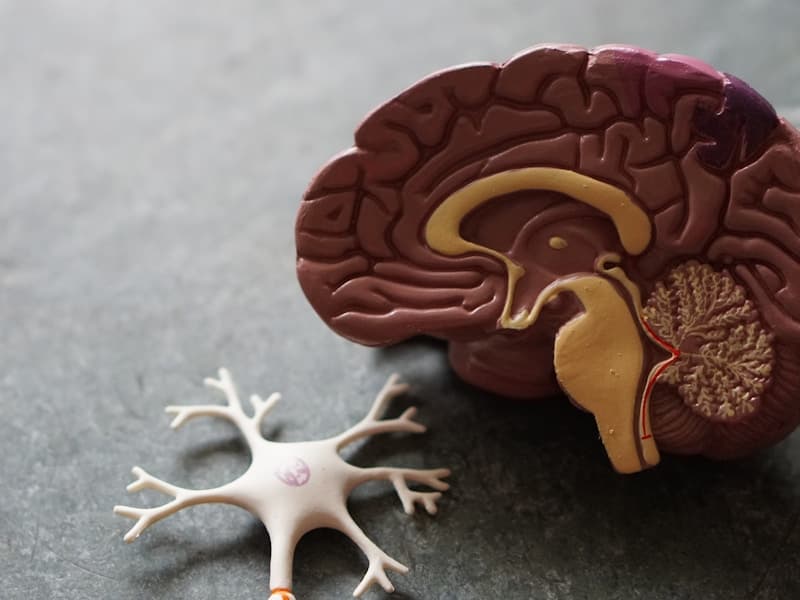
Traumatic Brain Injury
Advocating for brain injury survivors

Spinal Cord Injury
Paralysis and spinal injury claims

Wrongful Death
Compassionate representation for grieving families
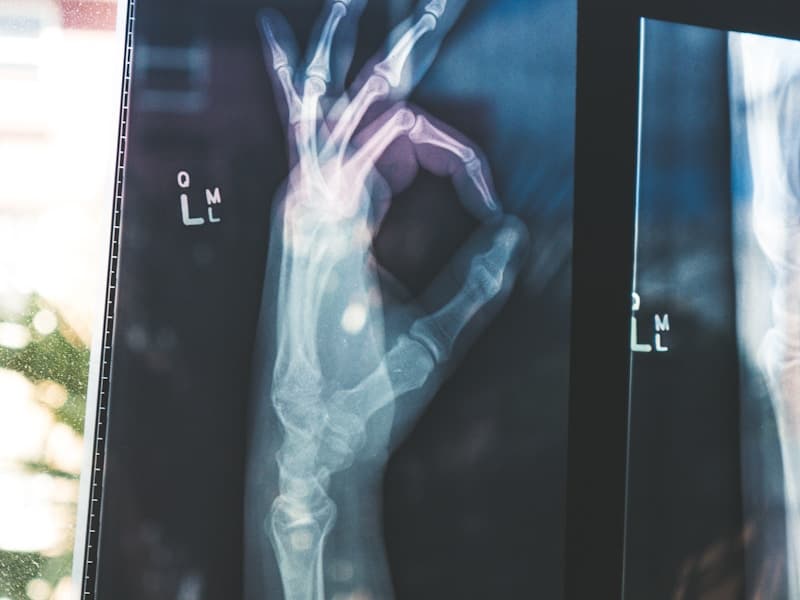
Amputation Injury
Limb loss and amputation claims
More Related Practice Areas and Cities
Helpful Reading for Austin Clients
What to Do Immediately After a Car Accident in Texas
The steps you take immediately after a car accident can significantly impact your injury claim. Learn what to do to protect your rights.
Car AccidentsHow Much Is My Car Accident Case Worth in Texas?
The value of your car accident case depends on several factors including injury severity, medical bills, lost wages, and the strength of your liability evidence. Learn what determines your claim's worth in Texas.
Legal GuideUnderstanding Texas Comparative Fault Laws
Texas follows a modified comparative fault rule. Learn how this affects your personal injury claim and potential compensation.
Cities We Serve Near Austin





Frequently Asked Questions in Austin
Get medical attention first. Dell Seton Medical Center at The University of Texas (Level I Trauma Center) is the closest level of care most Austin clients use for serious cases, and a written record from the date of the incident is one of the most valuable pieces of evidence we ever obtain. From there, document the scene with photographs, collect contact information for any witness who saw what happened, and avoid giving any recorded statement to an insurance adjuster until you have spoken with a lawyer. Whiplash and cervical spine injuries often takes days to fully present, which is another reason early documentation matters.
Most personal injury cases brought by clients in Travis are filed in the county district courts, with Travis County Civil Courthouse, 1700 Guadalupe St, Austin, TX 78701 serving as the principal venue. Each Travis bench runs its docket a little differently, and the local rules on scheduling, mediation, and pre-trial conferences vary from court to court. Our attorneys are in those courtrooms often enough that we plan around those rhythms rather than reacting to them.
Trauma care in Austin is concentrated at facilities including Dell Seton Medical Center at The University of Texas (Level I Trauma Center), St. David's South Austin Medical Center, and Ascension Seton Medical Center Austin. Common injuries treated at these centers include Whiplash and cervical spine injuries, Broken bones and fractures, and Traumatic brain injuries and concussions. Choosing a hospital with experience in your specific injury type can affect both your recovery and the medical documentation that supports your claim.
Texas Civil Practice and Remedies Code Section 16.003 sets a two-year statute of limitations on most personal injury claims. The clock usually starts on the date of injury. Exceptions apply for minors, discovery-rule cases, and claims against government entities. Consult an attorney promptly to preserve your options.
There is no single cause, but Speeding and aggressive driving comes up often enough in the Austin cases we handle that it is one of the first things we look for. Geographically, I-35 and I-35 corridor through downtown Austin are recurring locations, and the conditions specific to those places, road design, traffic volume, lighting, and signage, all factor into liability. We build the evidentiary record with crash reports, witness statements, and any available video before adjusters can lock in their version of events.
Daily familiarity with the courthouse and the community. Our team works Travis matters week in and week out, which means we know the bench at Travis County Civil Courthouse, 1700 Guadalupe St, Austin, TX 78701 on a first-name basis and we know how juries pulled from Downtown, South Congress, and East Austin tend to read a personal injury case. That continuity affects everything from how we schedule depositions to how we frame opening statements.
Bring Your Austin Car Accident Case to a Firm That Tries Them
Evidence fades. Witnesses move. Adjusters lock in their position. Our Austin car accident attorneys will review your case at no cost, and you owe us nothing unless we recover.