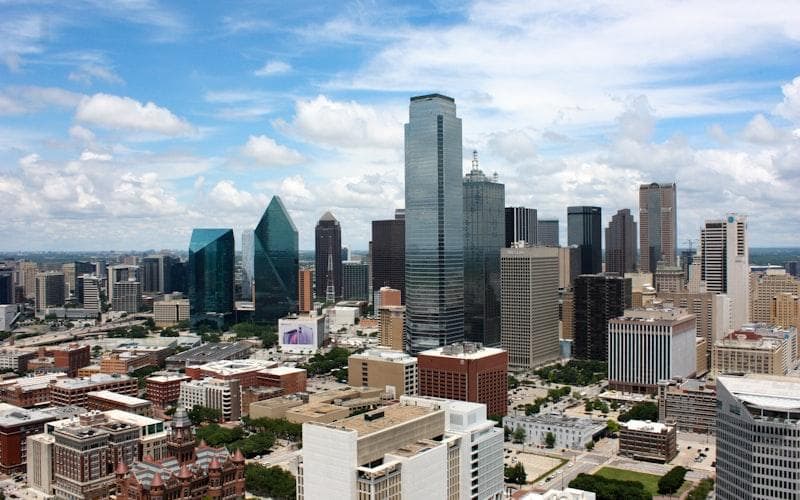
Dallas Head-On Collision Lawyer
Head-on collisions are among the most dangerous types of car accidents. We help victims of these devastating crashes pursue maximum compensation for their injuries.
Dallas is one of the largest cities in Texas with complex highway systems and high traffic volume. Our attorneys handle serious injury cases throughout the Dallas-Fort Worth metroplex.
Serving Dallas
Attorney Israel Medina handles your case personally
You speak directly with your attorney
North Texas
Dallas County
No Fee Unless We Win
Free consultation available
24/7 Availability
We’re here when you need us
Head-On Collision Lawyer in Dallas, Texas
Medina & Medina handles head-on collision cases for clients across North Texas, where the Dallas County courts have their own pace, their own customs, and their own expectations of trial counsel. A serious injury in Dallas deserves a lawyer who walks into those courtrooms on a regular basis. Our consultations are free, and we charge nothing unless we win the recovery.
Why Choose a Local Dallas Head-On Collision Attorney?
- Familiarity with Dallas courts, judges, and local legal procedures
- Knowledge of dangerous corridors in Dallas, including I-35E and I-30
- Established relationships with trusted local medical providers and expert witnesses
- Convenient access for in-person meetings at our office near Dallas
Medina & Medina combines local expertise with proven results across North Texas. We offer free consultations to every Dallas victim and charge no fee unless we win your case.
Compensation for Head-On Collision Victims in Dallas
Medical Expenses
All treatment costs related to your injury
Lost Income
Wages lost while recovering
Pain & Suffering
Compensation for physical and emotional distress
Future Damages
Long-term care and lost earning capacity
Texas Statute of Limitations
The Texas filing clock for most personal injury claims runs out at two years from the date of injury. Witnesses move, surveillance gets overwritten, and adjuster files harden long before that. Reach us early.
Head-On Collision Cases in Dallas
Head-On Collision cases in Dallas frequently arise along major corridors including I-35E, I-30, US-75 (Central Expressway), I-635 (LBJ Freeway). Dallas has a population of approximately 1.3 million residents, making it the third largest city in Texas and ninth largest in the United States
High-risk areas in Dallas include I-35E and I-30 (Mixmaster) interchange, I-635 (LBJ Freeway) corridor, US-75 (Central Expressway) through North Dallas, I-30 through East Dallas, Stemmons Freeway (I-35E) near the Design District. If you have been injured near any of these locations, our attorneys can help.
- Dallas County consistently ranks among the top counties in Texas for traffic fatalities, with over 200 fatalities in recent years
- The Dallas-Fort Worth metroplex is one of the fastest-growing metro areas in the nation, with over 7.5 million residents in the combined metro
Understanding Head-On Collision Cases
Common Causes
In Dallas, head-on collision cases often trace back to conditions on I-35E and near I-35E and I-30 (Mixmaster) interchange. Local drivers and pedestrians encounter these specific risks when navigating these corridors.
- Wrong way driving on highways and divided roads
- Crossing the center line while distracted or drowsy
- Impaired driving causing loss of directional control
- Attempting to pass on two lane roads with oncoming traffic
- Overcorrecting after drifting off the road
- Confused elderly or impaired drivers entering highway exit ramps
Typical Injuries
Accident victims in Dallas are typically transported to trauma centers including Parkland Memorial Hospital (Level I Trauma Center). The following injuries are common outcomes of these incidents.
- Fatal injuries from the combined speed of both vehicles
- Catastrophic traumatic brain injuries
- Chest injuries from steering wheel and airbag impact
- Bilateral leg and knee fractures from dashboard intrusion
- Facial reconstruction injuries from windshield impact
- Severe spinal cord injuries resulting in paralysis
Establishing Liability
For head-on collision claims filed in Dallas, liability often turns on evidence gathered from specific Dallas locations, including I-35E and I-30 (Mixmaster) interchange.
Head on collisions typically result from one driver crossing into the opposing lane of traffic, making fault relatively clear in most cases. Physical evidence such as debris patterns, tire marks, and vehicle damage indicate which driver crossed the centerline. When impairment or distraction is involved, toxicology results and phone records provide compelling evidence of negligence that can also support punitive damage claims.
Relevant Texas Law
Residents of Dallas pursue these claims under the same Texas statutes that govern all state personal injury actions.
Texas Transportation Code Section 545.051 requires vehicles to be driven on the right half of the roadway, and crossing the center line into oncoming traffic constitutes a clear violation. When a head on collision results from intoxication, Texas Civil Practice and Remedies Code Chapter 41 allows recovery of exemplary damages. The combined impact forces in head on collisions frequently result in wrongful death claims governed by Texas Civil Practice and Remedies Code Sections 71.001 through 71.012.
Ready to discuss your case?
Free consultation. No fee unless we win.
Local Resources and Courts in Dallas
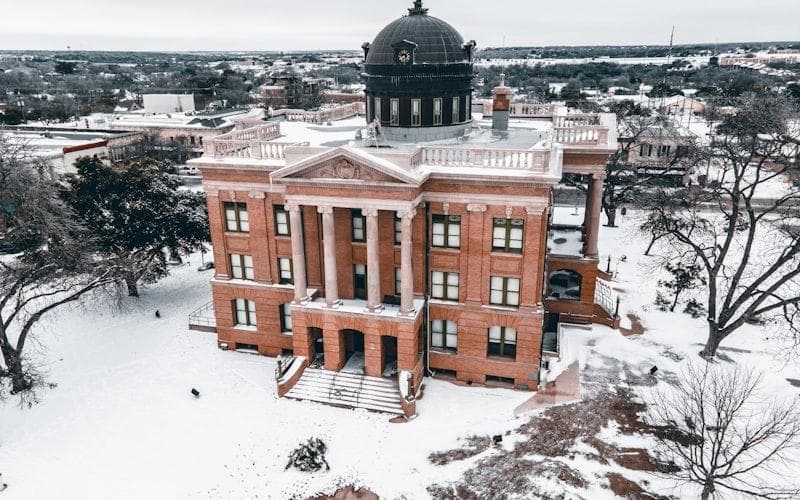
George L. Allen Sr. Courts Building, 600 Commerce St, Dallas, TX 75202
Personal injury civil cases in Dallas are filed in the Dallas County District Courts. Dallas County has numerous district courts handling civil matters, housed primarily at the George Allen Courts Building in downtown Dallas.
Nearby Hospitals and Trauma Centers
- Parkland Memorial Hospital (Level I Trauma Center)
- Baylor University Medical Center
- UT Southwestern Medical Center
- Texas Health Presbyterian Hospital Dallas
Free Case Evaluation
Get a free review of your case in minutes.
Or call now
(512) 500-2810Dallas Head-On Collision Cases: How They Arise
Head-on collisions in Texas concentrate on rural undivided highways where one driver crossed the center line, most often because of impairment, fatigue, or distraction, and secondarily because of mechanical failure or evasive maneuver. The west Texas highways, the Hill Country FM roads, and the long stretches of rural U.S. and state highways across south Texas are particularly prone to this pattern. Wrong-way crashes on divided interstates (often impaired-driver cases entering via off-ramps) are a distinct subset.
- Two-lane head-ons on FM-1382 and FM-2964 corridors in Dallas County perimeter
- Centerline-crossing crashes on US-175 and SH-310 in southeast Dallas County
- High-speed centerline-crossing crashes on Spur 408 and feeder roads
Verdict and Settlement Bands
Dallas County head-on collision verdicts have ranged from roughly $350,000 in matters with disputed centerline crossing to over $12 million in catastrophic and wrongful-death matters with documented impairment or distracted-driving at impact, with mid-range serious cases tracking the $850,000 to $3M band.
The Injury Picture
Head-on collision energy is the worst of any crash type because the closing speeds combine. Traumatic brain injury, multiple-system trauma, spinal-cord injury, amputation, and wrongful death are the recurring patterns. Survivors face long ICU and rehabilitation stays.
The Liability Framework
Crossing the center line is a per-se violation of Texas Transportation Code § 545.060 (driving on right side of roadway) and § 545.057 (passing on the left). Combined with negligence-per-se theories on impairment or device use, liability is typically clear unless mechanical failure is asserted. The damages picture is what drives the case.
Where This Case Would Be Filed
Dallas County civil district courts hear these matters under the two-year SOL in CPRC § 16.003; head-on cases turn on the CR-3 diagram, the EDR delta-V data, and any available roadway-camera or in-vehicle telematics.
Procedural Notes
Accident reconstruction is essential; the EDR data from both vehicles, the road geometry, and the rest-position analysis must be developed early to anticipate sudden-emergency or mechanical-failure defenses.
Our Reach in Dallas County
Our attorneys represent personal injury clients in the Dallas County District Courts at the George Allen Sr. Courts Building in downtown Dallas, including catastrophic-injury and wrongful-death matters across the DFW corridor.
The Local Jury
Dallas County juries skew urban and increasingly plaintiff-friendly in the past decade as demographics have shifted; remain conservative on punitive damages but receptive to compensatory awards in clear-liability commercial-vehicle cases.
Local Reference Points
- • US-175 southeast Dallas County corridor
- • FM-1382 Cedar Hill corridor
- • Spur 408 southwest Dallas County corridor
How Else We Help in Dallas
Car Accident
Expert legal help for car crash victims

18-Wheeler Accident
Advocating for trucking accident victims

Truck Accident
Specialized truck accident representation

Motorcycle Accident
Dedicated advocacy for injured riders
Traumatic Brain Injury
Advocating for brain injury survivors
Spinal Cord Injury
Paralysis and spinal injury claims

Wrongful Death
Compassionate representation for grieving families
Amputation Injury
Limb loss and amputation claims
More Related Practice Areas and Cities
Helpful Reading for Dallas Clients
What to Do Immediately After a Car Accident in Texas
The steps you take immediately after a car accident can significantly impact your injury claim. Learn what to do to protect your rights.
Car AccidentsHow Much Is My Car Accident Case Worth in Texas?
The value of your car accident case depends on several factors including injury severity, medical bills, lost wages, and the strength of your liability evidence. Learn what determines your claim's worth in Texas.
Serious InjuriesSpinal Cord Injuries from Car Accidents. What You Need to Know
A spinal cord injury from a car accident can change your life in an instant. The medical costs alone can reach millions of dollars over a lifetime. Texas law allows you to recover compensation for all of your losses, but building a strong case requires understanding the medical and legal complexities involved.
Cities We Serve Near Dallas






Frequently Asked Questions in Dallas
The order of operations is medical care, then evidence, then counsel. A trauma evaluation at Parkland Memorial Hospital (Level I Trauma Center) or a comparable Dallas facility creates the contemporaneous record that supports a future claim, especially when the injury is something like Fatal injuries from the combined speed of both vehicles that can be missed on a roadside check. Once you are stable, photograph everything you can and write down what you remember while the details are fresh. Insurance adjusters will call quickly. A short call with a lawyer before that conversation almost always changes the trajectory of the case.
Most personal injury cases brought by clients in Dallas are filed in the county district courts, with George L. Allen Sr. Courts Building, 600 Commerce St, Dallas, TX 75202 serving as the principal venue. Each Dallas bench runs its docket a little differently, and the local rules on scheduling, mediation, and pre-trial conferences vary from court to court. Our attorneys are in those courtrooms often enough that we plan around those rhythms rather than reacting to them.
Trauma care in Dallas is concentrated at facilities including Parkland Memorial Hospital (Level I Trauma Center), Baylor University Medical Center, and UT Southwestern Medical Center. Common injuries treated at these centers include Fatal injuries from the combined speed of both vehicles, Catastrophic traumatic brain injuries, and Chest injuries from steering wheel and airbag impact. Choosing a hospital with experience in your specific injury type can affect both your recovery and the medical documentation that supports your claim.
Yes. For most head-on collision cases in Texas, the law allows two years from the date of the injury to file suit. After that, even a strong case is generally barred. Minors, discovery-rule cases, and claims involving public entities run on different clocks, sometimes much shorter ones in the case of governmental defendants. Do not let a missed notice deadline kill an otherwise solid case.
Yes. The corridor along I-35E and the area around I-35E and I-30 (Mixmaster) interchange produce a disproportionate share of the head-on collision matters that come into our office out of Dallas. The most common precipitating factor we encounter is Wrong way driving on highways and divided roads. Our investigation usually starts with the crash or incident report, pulls in any nearby surveillance footage, and reaches out to witnesses while their memories are still reliable.
A local attorney in Dallas brings knowledge of Dallas, the bench at George L. Allen Sr. Courts Building, 600 Commerce St, Dallas, TX 75202, and the specific neighborhoods where our clients live, including the broader community. That local grounding helps with venue strategy, witness interviews, and communication with juries who reflect the community.
A Head-On Collision Lawyer in Dallas Is One Call Away
A short, free conversation is all it takes to know where you stand. Our Dallas head-on collision team handles cases on contingency, which means we get paid only when you do.