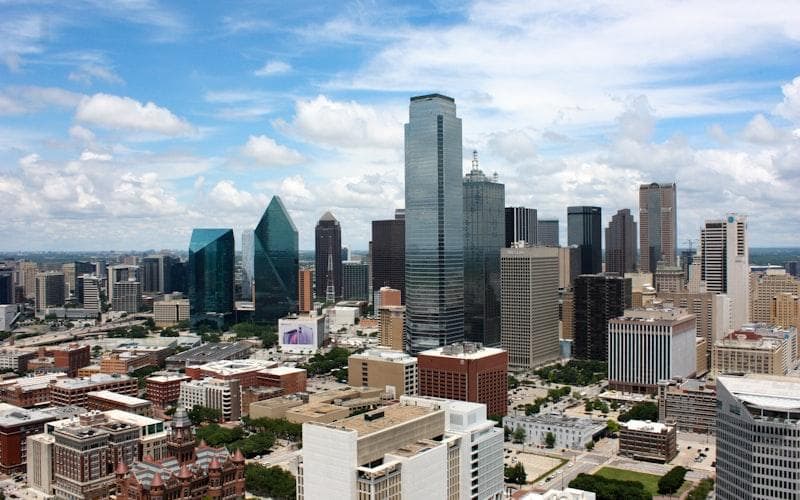
Dallas Motorcycle Accident Lawyer
Motorcycle riders face unique dangers on the road and often suffer severe injuries in crashes. We advocate passionately for riders injured due to negligent drivers or hazardous road conditions.
Dallas is one of the largest cities in Texas with complex highway systems and high traffic volume. Our attorneys handle serious injury cases throughout the Dallas-Fort Worth metroplex.
Serving Dallas
Attorney Israel Medina handles your case personally
You speak directly with your attorney
North Texas
Dallas County
No Fee Unless We Win
Free consultation available
24/7 Availability
We’re here when you need us
A Motorcycle Accident Law Firm Built for Dallas
Medina & Medina handles motorcycle accident cases for clients across North Texas, where the Dallas County courts have their own pace, their own customs, and their own expectations of trial counsel. A serious injury in Dallas deserves a lawyer who walks into those courtrooms on a regular basis. Our consultations are free, and we charge nothing unless we win the recovery.
How a Dallas-Based Motorcycle Accident Attorney Changes the Outcome
- Familiarity with Dallas courts, judges, and local legal procedures
- Knowledge of dangerous corridors in Dallas, including I-35E and I-30
- Established relationships with trusted local medical providers and expert witnesses
- Convenient access for in-person meetings at our office near Dallas
Medina & Medina combines local expertise with proven results across North Texas. We offer free consultations to every Dallas victim and charge no fee unless we win your case.
Compensation for Motorcycle Accident Victims in Dallas
Medical Expenses
All treatment costs related to your injury
Lost Income
Wages lost while recovering
Pain & Suffering
Compensation for physical and emotional distress
Future Damages
Long-term care and lost earning capacity
Texas Statute of Limitations
In Texas, you generally have two years from the date of your injury to file a personal injury lawsuit. Don’t wait. Contact us today to protect your rights.
Motorcycle Accident Cases in Dallas
Motorcycle Accident cases in Dallas frequently arise along major corridors including I-35E, I-30, US-75 (Central Expressway), I-635 (LBJ Freeway). Dallas has a population of approximately 1.3 million residents, making it the third largest city in Texas and ninth largest in the United States
High-risk areas in Dallas include I-35E and I-30 (Mixmaster) interchange, I-635 (LBJ Freeway) corridor, US-75 (Central Expressway) through North Dallas, I-30 through East Dallas, Stemmons Freeway (I-35E) near the Design District. If you have been injured near any of these locations, our attorneys can help.
- Dallas County consistently ranks among the top counties in Texas for traffic fatalities, with over 200 fatalities in recent years
- The Dallas-Fort Worth metroplex is one of the fastest-growing metro areas in the nation, with over 7.5 million residents in the combined metro
Understanding Motorcycle Accident Cases
Common Causes
In Dallas, motorcycle accident cases often trace back to conditions on I-35E and near I-35E and I-30 (Mixmaster) interchange. Local drivers and pedestrians encounter these specific risks when navigating these corridors.
- Drivers failing to check blind spots before changing lanes
- Left turning vehicles cutting off oncoming motorcycles
- Drivers opening car doors into motorcycle traffic
- Hazardous road conditions such as potholes and gravel
- Rear ending a motorcycle at intersections
- Drivers running red lights or stop signs at intersections
Typical Injuries
Accident victims in Dallas are typically transported to trauma centers including Parkland Memorial Hospital (Level I Trauma Center). The following injuries are common outcomes of these incidents.
- Road rash and severe skin abrasions
- Broken legs, ankles, and wrists
- Traumatic brain injuries even with helmet use
- Spinal cord injuries and paralysis
- Facial fractures and dental injuries
- Internal organ damage from blunt force impact
Establishing Liability
For motorcycle accident claims filed in Dallas, liability often turns on evidence gathered from specific Dallas locations, including I-35E and I-30 (Mixmaster) interchange.
Motorcycle accident liability often centers on the other driver failing to see the rider or misjudging the motorcycle speed. Accident reconstruction experts can analyze skid marks, point of impact, and vehicle damage to determine fault. Insurance companies frequently try to blame the motorcyclist, making it essential to preserve evidence quickly and counter any bias against riders.
Relevant Texas Law
Residents of Dallas pursue these claims under the same Texas statutes that govern all state personal injury actions.
Texas Transportation Code Section 545.420 grants motorcyclists the same rights and responsibilities as other vehicle operators on the roadway. Texas does not require adult riders over 21 to wear helmets if they have completed a safety course or carry qualifying insurance, but helmet use can become a factor in damages arguments. Under Texas Civil Practice and Remedies Code Section 33.001, the proportionate responsibility framework applies to motorcycle cases just as it does to other motor vehicle accidents.
Ready to discuss your case?
Free consultation. No fee unless we win.
Local Resources and Courts in Dallas
George L. Allen Sr. Courts Building, 600 Commerce St, Dallas, TX 75202
Personal injury civil cases in Dallas are filed in the Dallas County District Courts. Dallas County has numerous district courts handling civil matters, housed primarily at the George Allen Courts Building in downtown Dallas.
Nearby Hospitals and Trauma Centers
- Parkland Memorial Hospital (Level I Trauma Center)
- Baylor University Medical Center
- UT Southwestern Medical Center
- Texas Health Presbyterian Hospital Dallas
Free Case Evaluation
Get a free review of your case in minutes.
Or call now
(512) 500-2810The Motorcycle Accident Pattern in Dallas
Dallas motorcycle volume follows the freeway and arterial geometry that shapes the entire DFW commuter pattern. I-635 (LBJ Freeway) carries the high-speed lane-change crashes between the managed-toll LBJ Express and the free lanes, where a passenger vehicle cutting across to enter or exit the toll lanes at speed produces the classic blind-spot collision with the rider in the adjacent free lane. The Dallas North Tollway carries the same pattern at slightly lower volumes but at toll-corridor speeds. US-75 (Central Expressway) runs north from downtown through Park Cities with constant construction-zone shoulder work that compresses lanes and reduces escape geometry for a rider caught in stop-and-go traffic. Each corridor produces a recognizable injury profile.
Beyond the freeway grid, the Deep Ellum, Uptown, Bishop Arts, and Lower Greenville entertainment-district arterials produce the left-turn-across-rider and the late-night impaired-car-driver patterns. Greenville Avenue between Mockingbird Lane and the Lake Highlands segment carries the highest-volume left-turn pattern on the city's entertainment-arterial network, and the signalized intersections through that stretch are documented sites in the local riding community. The Bishop Arts perimeter on the Oak Cliff side adds its own subset of weekend evening incidents. Winter ice events on the elevated portions of I-635 and the Dallas North Tollway are not just a car-crash hazard; for riders on the road during the temperature drop, the bridge-deck glaze is a single-vehicle catastrophic-injury event waiting to happen. Parkland Memorial Hospital is the Level I trauma center for the county; Baylor University Medical Center holds a second Level I designation east of downtown.
The helmet question on a Dallas motorcycle case is the predictable mitigation fight. Texas Transportation Code section 661.003 requires riders under twenty-one to wear a helmet, and over-twenty-one riders may waive only with proof of medical insurance or MSF course completion. The 2009 amendments and the related Insurance Code provisions limit the use of non-helmet status as direct evidence of liability, and defense counsel knows the boundary but pushes against it on injury causation. Pulling the MSF course completion record and the medical-insurance proof from the rider's wallet within days of the crash is part of the pre-flight on every over-twenty-one Dallas motorcycle case. Lane-splitting under Texas Transportation Code section 545.060 is the other recurring defense hook in any lane-position case. The two-year statute of limitations under Civil Practice and Remedies Code section 16.003 runs from the date of crash, and modified comparative fault under section 33.001 caps recovery at the fifty-percent threshold.
Dallas County juries have shifted measurably over the past decade as the demographic of the county has changed. The venire is increasingly plaintiff-friendly in clear-liability compensatory cases against commercial defendants, but remains conservative on damages that look out of proportion to the documented injury. The motorcycle-aware versus motorcycle-unaware split shows up in voir dire and matters more in Dallas than in some peer venues. Aggregate Dallas County motorcycle verdicts have run from roughly $60,000 in low-severity cases to over $5 million in catastrophic head-injury and wrongful-death cases, with median serious-injury cases settling in the $300,000 to $1.5 million band. Defense counsel here, Cooper & Scully, Thompson Coe, and Hartline Barger, recur on the auto and trucking side and prepare aggressively on the helmet, lane-position, and prior-riding-history theories. The case file built to win in front of a Dallas County jury has to be built to withstand all three.
Verdict and Settlement Bands
Dallas County motorcycle verdicts have ranged from $60,000 (low-severity cases) to over $5 million (catastrophic head-injury and wrongful-death cases), with median serious-injury cases settling in the $300,000-$1.5M band.
How These Cases Arise
The dominant motorcycle-crash pattern in Texas is the left-turn collision: a car turns across the rider's lane after misjudging the motorcycle's closing speed or simply not seeing it. Lane-change blind-spot incidents on I-35, MoPac, and Loop 1604 produce the next-largest share. Rear-end collisions at stoplights, made worse by drivers focused on phones rather than the road in front of them, are increasingly common, and so are unsafe-pass crashes on rural FM roads. The riders themselves contribute fewer crashes than the public stereotype suggests, but speed and impairment on the rider's side do show up.
- I-635 and Dallas North Tollway lane-change collisions
- Deep Ellum and Bishop Arts entertainment-district late-night crashes
- Greenville Avenue and Lower Greenville left-turn-across-rider incidents
The Injury Picture
Because there is no metal between the rider and the road, motorcycle injuries skew toward catastrophic by default. Traumatic brain injury (helmet use cuts severity but does not eliminate it), open fractures, severe road rash, internal abdominal injury, and traumatic amputation are routine. Survivors often face multiple reconstructive surgeries, lifelong scarring, and long-term orthopedic rehabilitation. Wrongful-death claims arise in a high fraction of multi-vehicle motorcycle crashes.
The Liability Framework
Texas's helmet law (Transportation Code § 661.003) does not bar recovery for riders who choose not to wear a helmet, although insurers and defense counsel will press the issue under comparative fault. Lane-splitting and lane-filtering remain illegal under § 545.060, which can create comparative-fault arguments. The 2009 Texas Helmet Law and accompanying Insurance Code provisions limit the use of non-helmet status as evidence in liability cases, though it can still factor into injury causation analysis. Standard Texas negligence law governs the crash itself.
Where This Case Would Be Filed
Dallas County district courts hear these cases.
Procedural Notes
Defense counsel routinely subpoena rider riding history, training records, and prior tickets in discovery to argue the rider's risk-taking; we move to limit this aggressively under Texas Rule of Evidence 404. Motorcycle-specific accident reconstruction expertise is almost always needed.
Our Reach in Dallas County
Our attorneys represent personal injury clients in the Dallas County District Courts at the George Allen Sr. Courts Building in downtown Dallas, including catastrophic-injury and wrongful-death matters across the DFW corridor.
The Local Jury
Dallas County juries skew urban and increasingly plaintiff-friendly in the past decade as demographics have shifted; remain conservative on punitive damages but receptive to compensatory awards in clear-liability commercial-vehicle cases.
Local Reference Points
- • I-635 LBJ Freeway
- • Deep Ellum entertainment district
- • Lower Greenville Avenue
Learn More About Your Claim in Dallas
Injured in a left turn motorcycle accident in Austin, Texas? Medina & Medina Law Firm fights for motorcycle riders who were struck by negligent drivers making left turns. Free consultation.
Hurt in a lane splitting motorcycle accident in Austin? Texas law is complex on lane splitting claims. Medina & Medina fights for injured riders. Free consultation available.
Hit by a drunk driver while riding your motorcycle in Austin, Texas? Medina & Medina holds intoxicated drivers accountable for the devastating injuries they cause. Free consultation.
Motorcycle accident caused by a road hazard in Austin, Texas? Potholes, debris, and poor road conditions can be deadly for riders. Medina & Medina can help. Free consultation.
Injured in a motorcycle accident without a helmet in Austin, Texas? You can still recover compensation. Medina & Medina protects the rights of all injured riders. Free consultation.
How Else We Help in Dallas
Car Accident
Expert legal help for car crash victims

18-Wheeler Accident
Advocating for trucking accident victims

Truck Accident
Specialized truck accident representation

Drunk Driving Accident
Holding drunk drivers accountable

Traumatic Brain Injury
Advocating for brain injury survivors
Spinal Cord Injury
Paralysis and spinal injury claims

Wrongful Death
Compassionate representation for grieving families
Amputation Injury
Limb loss and amputation claims
More Related Practice Areas and Cities
Helpful Reading for Dallas Clients
What to Do Immediately After a Car Accident in Texas
The steps you take immediately after a car accident can significantly impact your injury claim. Learn what to do to protect your rights.
Car AccidentsHow Much Is My Car Accident Case Worth in Texas?
The value of your car accident case depends on several factors including injury severity, medical bills, lost wages, and the strength of your liability evidence. Learn what determines your claim's worth in Texas.
Legal GuideUnderstanding Texas Comparative Fault Laws
Texas follows a modified comparative fault rule. Learn how this affects your personal injury claim and potential compensation.
Cities We Serve Near Dallas




Frequently Asked Questions in Dallas
The order of operations is medical care, then evidence, then counsel. A trauma evaluation at Parkland Memorial Hospital (Level I Trauma Center) or a comparable Dallas facility creates the contemporaneous record that supports a future claim, especially when the injury is something like Road rash and severe skin abrasions that can be missed on a roadside check. Once you are stable, photograph everything you can and write down what you remember while the details are fresh. Insurance adjusters will call quickly. A short call with a lawyer before that conversation almost always changes the trajectory of the case.
Most personal injury cases brought by clients in Dallas are filed in the county district courts, with George L. Allen Sr. Courts Building, 600 Commerce St, Dallas, TX 75202 serving as the principal venue. Each Dallas bench runs its docket a little differently, and the local rules on scheduling, mediation, and pre-trial conferences vary from court to court. Our attorneys are in those courtrooms often enough that we plan around those rhythms rather than reacting to them.
Trauma care in Dallas is concentrated at facilities including Parkland Memorial Hospital (Level I Trauma Center), Baylor University Medical Center, and UT Southwestern Medical Center. Common injuries treated at these centers include Road rash and severe skin abrasions, Broken legs, ankles, and wrists, and Traumatic brain injuries even with helmet use. Choosing a hospital with experience in your specific injury type can affect both your recovery and the medical documentation that supports your claim.
The general rule is two years from the date of the injury, under Section 16.003 of the Texas Civil Practice and Remedies Code. The clock can run on a different schedule when the claimant is a minor, when the injury was not reasonably discoverable until later, or when a government entity is involved, where notice deadlines can fall as early as six months. The cleanest way to know exactly where the clock stands in your case is a short call with a lawyer who can look at the dates.
In Dallas, these cases frequently arise along I-35E and at high-risk locations such as I-35E and I-30 (Mixmaster) interchange. A recurring cause we see is Drivers failing to check blind spots before changing lanes, which we investigate through police reports, eyewitness accounts, and available video footage.
Daily familiarity with the courthouse and the community. Our team works Dallas matters week in and week out, which means we know the bench at George L. Allen Sr. Courts Building, 600 Commerce St, Dallas, TX 75202 on a first-name basis and we know how juries pulled from the broader community tend to read a personal injury case. That continuity affects everything from how we schedule depositions to how we frame opening statements.
Your Dallas Motorcycle Accident Case Starts With a Conversation
Don’t wait to get legal help. Contact our Dallas motorcycle accident lawyers today for a free consultation. No fee unless we win your case.